Guide
Kayaking in Costa Rica
Sea, mangrove and river trips for every level
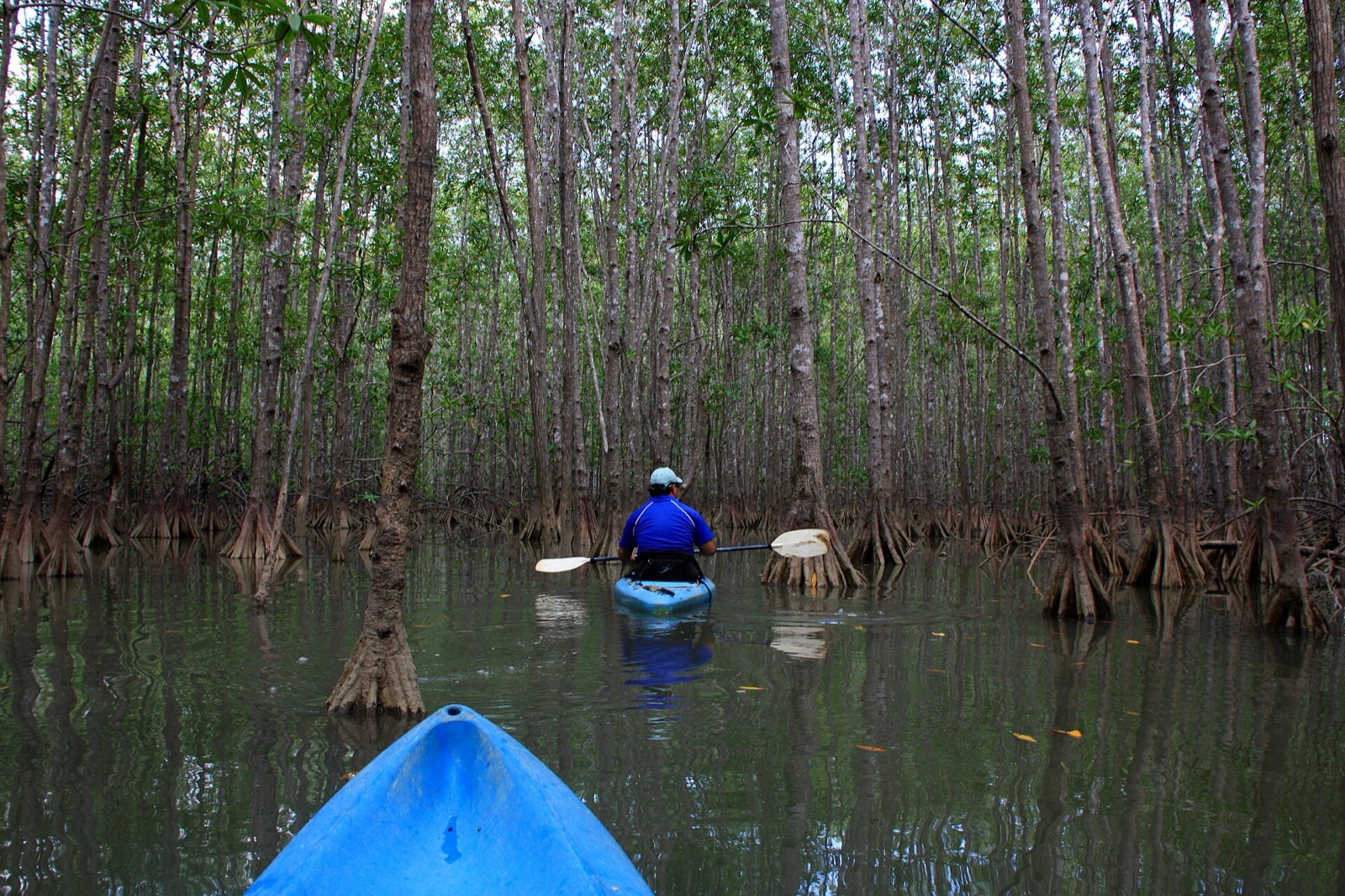
Costa Rica has calm mangrove channels, sheltered gulfs, lakes and whitewater rivers, so there's kayaking for nearly every level. Beginners do best on guided mangrove or bay tours in the morning, while experienced paddlers can try sea kayaking in the Gulf of Nicoya or Golfo Dulce, or whitewater on rivers like the Pacuare.
Why kayak in Costa Rica
A kayak is quiet, low to the water and goes where motorboats can't: up shallow mangrove channels, along rocky shorelines and into small coves. In Costa Rica that means a real chance of seeing herons, kingfishers, crocodiles, monkeys and sloths from the water, and on the coast, sea turtles, dolphins and rays. It's also one of the easiest water sports to start: most guided tours need no experience, just reasonable fitness and comfort in the water.
Types of kayaks you'll use
- Sit-on-top kayaks: the open, unsinkable plastic boats used on most tours and beach rentals. Easy to climb back on if you fall off, and fine in warm water. You'll get wet, which is fine here.
- Sit-in sea kayaks (touring kayaks): longer, narrower boats with a cockpit and often a rudder or skeg. Faster and more efficient over distance, used on multi-day trips. You'll want some instruction, including how to exit if you capsize.
- Tandem (double) kayaks: 2 paddlers in one boat, common on tours and great for couples or a parent with a child. Stable, but you have to coordinate strokes.
- Whitewater kayaks: short, maneuverable boats for rivers. Run only with qualified guides or if you have proper whitewater training. Most visitors experience Costa Rica's rivers by raft instead.
- Inflatable kayaks ("duckies"): used on some gentler river runs.
If you'd rather stand, see stand-up paddle boarding, which uses many of the same calm spots.
Where to paddle
Mangroves and estuaries (best for beginners)
- Damas Island estuary, near Quepos: a maze of mangrove channels a short drive from Quepos and Manuel Antonio. Tours usually time the trip with the tide. Look for herons, ibis, crabs and sometimes monkeys. See Central Pacific.
- Térraba-Sierpe wetlands: one of the largest mangrove systems in Central America, near Sierpe on the way to Drake Bay. Boat tours are more common, but guided kayaking is possible. See Southern Pacific.
- Tamarindo estuary and the Nicoya coast: the river mouth at Tamarindo and estuaries elsewhere on the Nicoya Peninsula have calm channels. Crocodiles live in many Pacific estuaries, so go with a guide and stay in the boat.
Sea kayaking on the Pacific
- Gulf of Nicoya: sheltered water and islands, including the area around Curú and the islands off Tambor and Paquera, make it one of the best places for sea kayaking and multi-day island trips. See Southern Nicoya.
- Bahía Culebra and Playa Hermosa, Guanacaste: clear water and rocky points for paddling and snorkeling, but watch the Papagayo winds from about December to March, which can blow paddlers offshore. See Guanacaste.
- Ballena Marine National Park, Uvita: paddling along the coast near Punta Uvita, sometimes with whales offshore in season (roughly July to November and December to March). Surf and swell can be strong, so this is better with a guide. Park rules apply.
- Golfo Dulce: a deep, calm gulf between the Osa Peninsula and the mainland, with dolphins, little traffic and forest down to the water. Good for day trips and longer expeditions from Puerto Jiménez or Golfito.
Caribbean and inland
- Tortuguero canals: a national park of channels, lagoons and rainforest with no road access. Paddling the quieter side canals by kayak or canoe is a classic way to see wildlife. Park entry and guide rules apply. See Caribbean.
- Lake Arenal: the country's largest lake, with calm mornings, views of Arenal Volcano and easy access from La Fortuna. Afternoon winds pick up, which is why it's also a windsurfing spot.
- Whitewater rivers: the Pacuare and Reventazón (near Turrialba) and the Sarapiquí are the best-known. These are for guided trips; water levels change fast with rain.
When to go
- Time of day matters most. On both coasts, mornings are usually calmest. Wind and afternoon storms, especially in the rainy season, can turn a flat bay choppy and bring lightning. Plan to be off the water by early afternoon.
- Dry season (December to April): most dependable for sea kayaking on the Pacific, though the Papagayo winds affect northern Guanacaste.
- Rainy season (May to November): fine for mangrove and estuary tours, and greener. Rivers run higher and faster, which suits whitewater but makes it more serious. September and October are often the wettest months on the Pacific.
- Tides: Pacific tides are big, often 2 to 3 meters. Mangrove channels can drain at low tide and currents can be strong at river mouths, so good guides plan around tide tables.
Safety basics
- Always wear a life jacket (PFD), properly fastened, even in calm water.
- Go guided if you don't know the area. Local guides know the tides, currents and where crocodiles hang out.
- Sun protection: hat, sunglasses with a strap, long-sleeve sun shirt and reef-safe sunscreen. Reflection off the water doubles the burn.
- Drink water: bring at least 1 liter per person for a short tour.
- Mind the wind and currents: paddle into the wind on the way out so it helps you home. Avoid river mouths on an outgoing tide.
- Know rip currents: if you launch or land through surf, watch the waves and follow the guide's timing.
- Wildlife: don't feed animals, keep your distance from crocodiles, and never chase dolphins, whales or turtles.
- Protect your gear: use a dry bag and a phone pouch, and leave valuables behind.
Good to combine with
Many sailing day trips carry kayaks for use at the anchorage, and some snorkel tours include a short paddle. See sailing tours, Sailing in Costa Rica, An introduction to snorkeling, and our water sports section for kayak tours and rentals.
Frequently asked questions
Do I need experience to kayak in Costa Rica?
Not for guided mangrove, lake or bay tours, which are designed for beginners. Multi-day sea kayaking and whitewater kayaking need training or proper experience.
Are there crocodiles where people kayak?
Yes, in many Pacific estuaries and rivers. Guided tours manage this by keeping distance and staying in the boats. Don't swim in estuaries.
What's the best place for a first kayak trip?
A calm mangrove tour like Damas Island near Quepos, or a morning paddle on Lake Arenal or in the Gulf of Nicoya.
Can kids go kayaking?
Many tours take children in tandem kayaks with an adult. Ask about minimum ages and child-size life jackets when you book.
Is it better to kayak in the morning or afternoon?
Morning. Winds are lighter, the water is calmer and you avoid the afternoon storms that are common in the rainy season.